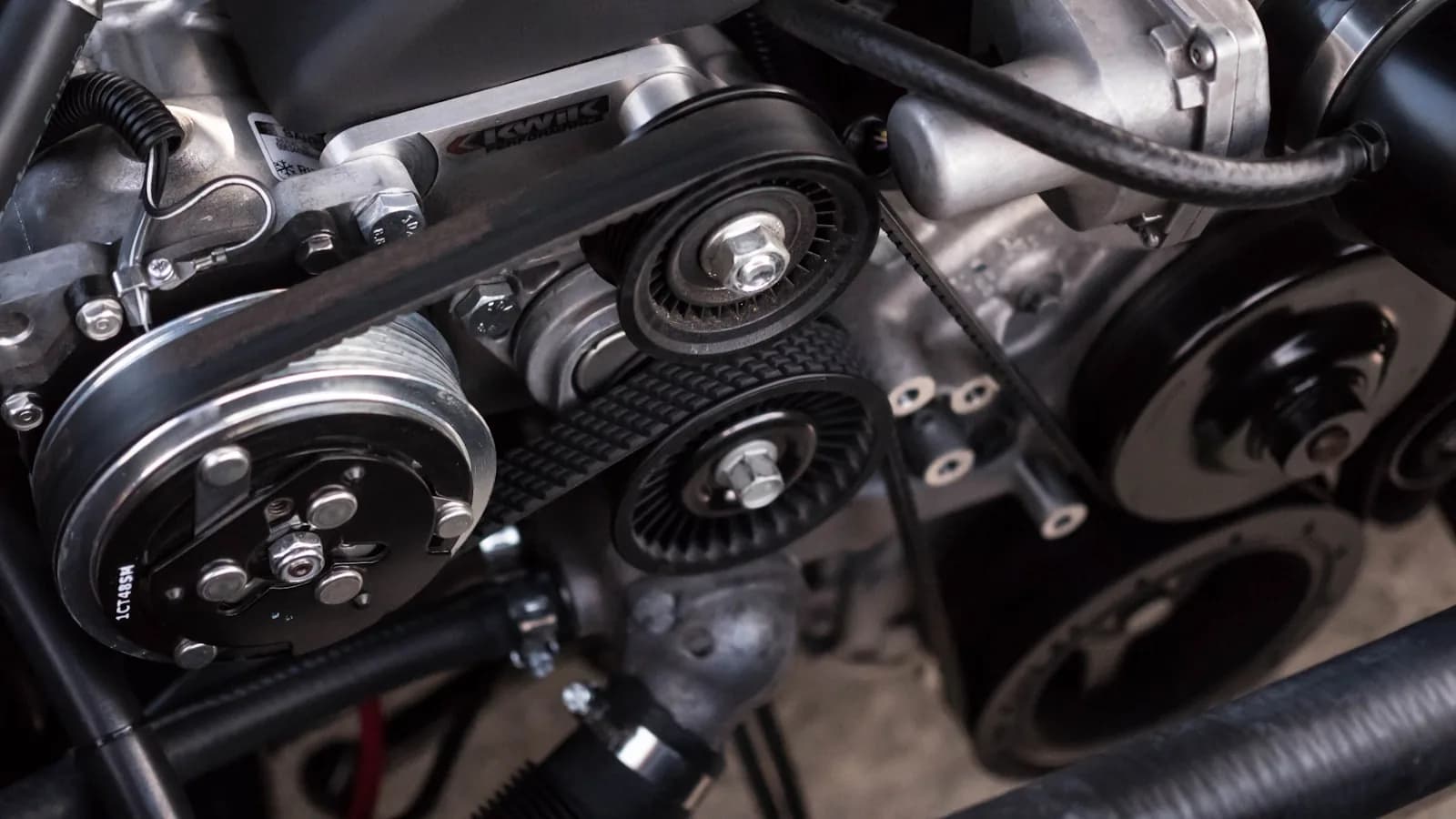
Here’s the maintenance job most people forget about until it’s too late: the timing belt. Timing belt replacement in Melbourne isn’t cheap, but a snapped belt on the wrong engine can cost you five to ten times more, sometimes a whole engine. If you drive a VW or Audi, this one’s especially worth two minutes of your time. We replace timing belts every week at our Knoxfield workshop, so here’s the honest rundown: what it should cost, what it does, and when it’s due.
What timing belt replacement costs in Melbourne
Here are the general ranges so you can plan before you ring around. These come from independent Australian cost guides and cover parts and labour. The belt itself is cheap. The bill is mostly the hours it takes to get to it.
These are estimates only. What you pay depends on your car's model and the parts it needs. Give us your car's details and we'll work out the best price we can get for you. The decision is yours.
| Vehicle | Timing belt replacement cost |
|---|---|
| Small car (Corolla, Mazda 3, i30, Barina) | $520 – $1,000 |
| Mid-size car (Magna, 380, Camry) | $580 – $1,150 |
| Subaru (EJ boxer engines) | $700 – $1,400 |
| Large SUV and ute with a belt (Captiva, older Ranger and Hilux diesels) | $750 – $1,500 |
| European (VW, Audi, Skoda) | $900 – $1,500+ |
| European (BMW and prestige) | $950 – $1,800+ |
A belt-only job is at the bottom of each range. A full kit with the water pump, tensioner and idlers adds $200 to $600 in parts and sits toward the top. Labour runs about 3 to 4 hours on a simple four-cylinder and 5 to 8 hours on a European engine where the front of the car has to come apart.
We quote firm once we know your exact car, not before. And if you just want peace of mind, we can inspect the belt’s condition and tell you honestly whether it’s due or has life left in it.
Do you even have a timing belt?
Not every car has one, and it changes everything. Plenty of engines use a timing chain instead of a belt, and chains are built to last much longer, often the life of the engine. Belts are rubber, and rubber wears out on a schedule.
If you’re not sure which your car has, we can tell you in a minute, or it’ll be in your logbook. As a rule of thumb for the popular utes: the current Toyota Hilux (2015 on) and the Ford Ranger from 2011 on run a chain, while the older 3.0-litre diesel Hilux before 2015 has a belt. Ford’s 2.0-litre bi-turbo Ranger and Everest used a belt that runs in oil, and Ford moved that engine to a chain for cars delivered from 2026. This guide is about belts. If you’ve got a chain, the advice is simpler: keep your oil changes up, because a neglected chain is usually an oil-starvation story.
When does a timing belt need replacing?
Two things wear a timing belt out: kilometres and age. Whichever comes first.
Most manufacturers call for replacement somewhere between 100,000 and 150,000 km, or roughly every 5 to 7 years. The age part is the one that trips people up. A low-kilometre car that’s spent years parked still needs the belt done on time, because the rubber perishes whether you drive it or not.
Always check your logbook for your car’s exact interval. And if you bought the car second-hand with no service history, treat the belt as overdue until someone proves otherwise.
VW, Audi and the interference-engine problem
This is the part we’d want a mate to know about. Most modern engines, and nearly all VW and Audi engines, are what’s called interference engines. The valves and pistons pass through the same space at different moments, and the timing belt is the only thing keeping them out of each other’s way.
If the belt snaps on an interference engine, the pistons meet the valves. Now you’re looking at bent valves, often piston and cylinder-head damage, and a bill that runs into the thousands, sometimes more than the car is worth. A timing belt is a few hundred to a bit over a thousand dollars. The engine behind it isn’t. That maths is the whole reason we nag people about this one.
Get the water pump done at the same time
Here’s where you actually save money. On a lot of engines, the water pump is driven by the timing belt and sits right behind it. Since the big cost of the job is the labour to get in there, it’s usually smart to replace the water pump, tensioner and idlers in the same visit, as a kit.
Do the pump separately a year later and you pay that same labour twice. We’ll tell you straight whether your engine is one where bundling it makes sense, or whether you’d just be spending money you don’t need to.
Book a timing belt check in Knoxfield
Not sure when your timing belt was last done? Don’t guess with an interference engine. We’ll check your logbook and the belt’s condition and give you a straight answer, plus a firm quote if it’s due.
Call the workshop on (03) 9763 0100, or book a timing and drive belt replacement online. We look after plenty of VW and Audi owners across Melbourne’s east, so see our European car servicing too. And if a logbook service is also due, we can line the belt up with it in the one visit. We’re at 5/1644 Ferntree Gully Rd, Knoxfield, an easy run from Wantirna, Rowville, Scoresby, Boronia and Ferntree Gully.