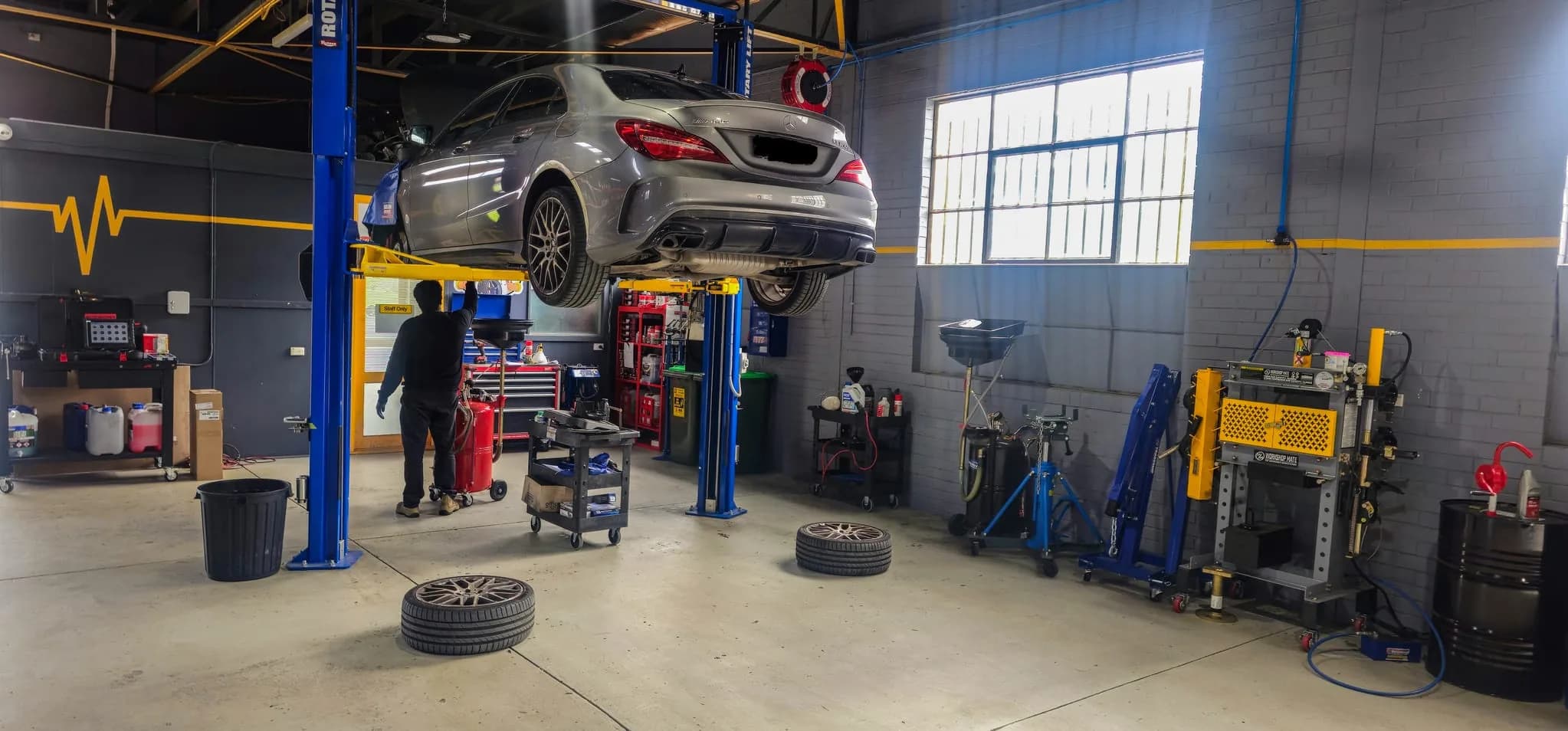
Nobody plans on needing ECU programming. You usually end up here because something else went wrong: a new part sits there doing nothing, a warning light appeared after a repair, the car needs a speed limiter set, or a fault keeps coming back and someone has mentioned the ECU.
Those four situations call for different work, so this page is laid out around them. Terry runs the mechanical side at our Knoxfield workshop, and ECU work starts the same way every time. We scan and test before writing to anything, because coding a module that was never the problem fixes nothing.
A new part won't work until it's coded
On plenty of modern cars, fitting the part is only half the repair, because the car still has to be told the part is there. You can fit the right component correctly and the car still won't behave.
The jobs this catches most often:
- Throttle bodies, which can leave the idle hunting until they're coded
- Injectors, which carry calibration codes entered cylinder by cylinder
- Mass airflow sensors and turbochargers
- Batteries on most European cars, where the charging system keeps treating a new battery as the old one until it's registered
- Transmission and body control modules, which lose their coding when replaced
Instrument clusters belong on this list too. A dead display, faulty gauges or warning lights that won't clear can mean a new cluster, and the replacement has to be programmed to your car before it will work. That means immobiliser pairing and configuration coding, with your genuine odometer reading carried across. We don't alter odometer readings.
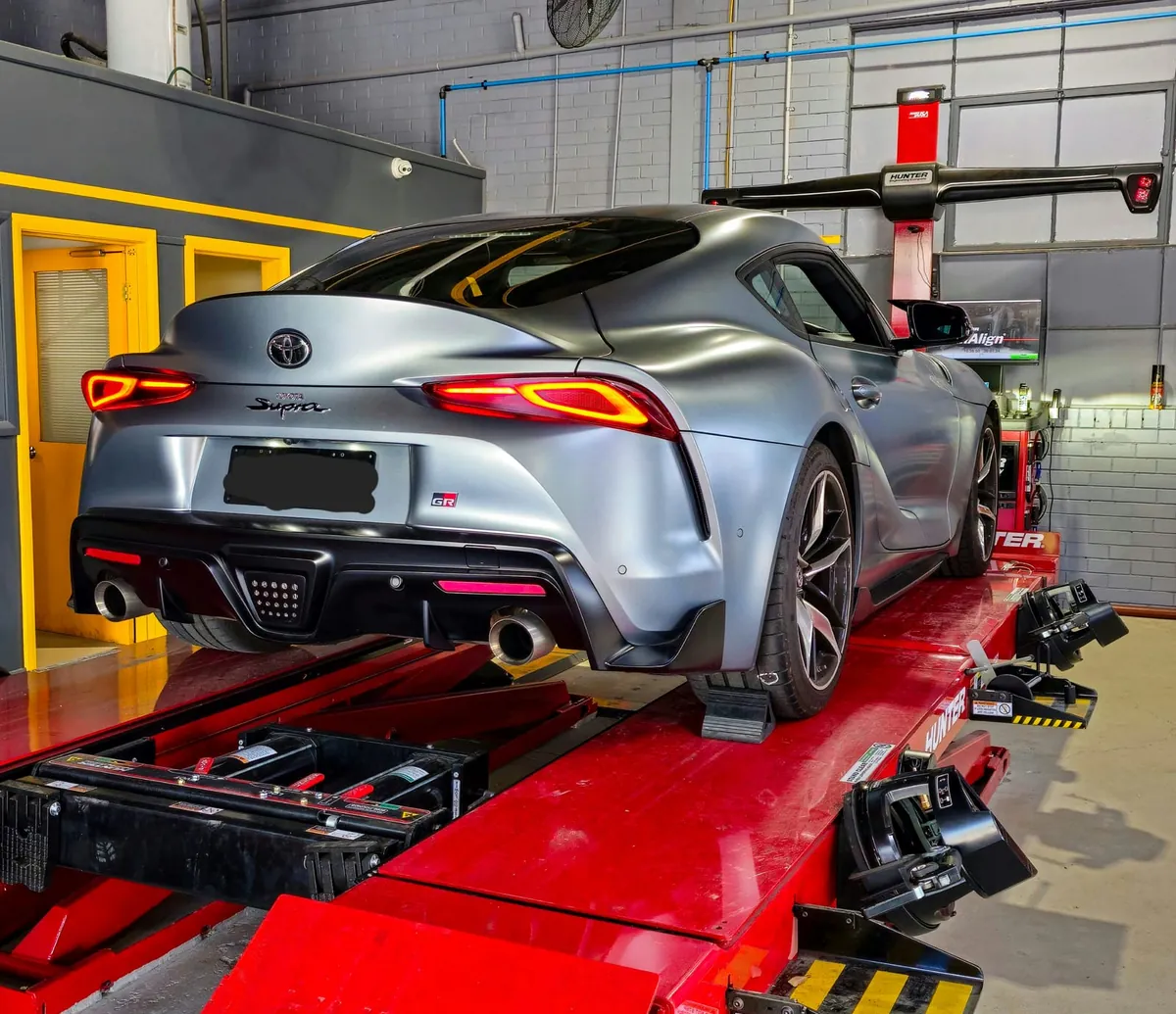
A warning light came on after a repair
Sometimes the mechanical work is finished and correct, and the light is only there because a module wasn't reset or calibrated afterwards. A few common examples:
Steering or suspension work can leave the stability control light on until the steering angle sensor is calibrated. We do that with wheel alignment where the car needs it. Brake jobs on cars with electric park brakes need the calipers put into service mode and reset afterwards, which is part of doing brake repairs on those cars. Diesels may need a forced DPF regeneration and a reset of the ash counters after emissions work.
Clearing the code on its own won't always hold. A full reset also clears adaptive memory, so the ECU relearns idle control, shift points and sensor readings. It often comes up after battery replacement, throttle body work or a sensor change, and it can bring a car out of limp mode when the stored data was the cause. If the code comes straight back, there's a live fault to find, and that's a job for diagnostic testing.
Got an invoice for whatever was replaced? Bring it. Knowing what has been fitted, and when, usually shows what hasn't been written to the car.
You need a speed limiter set or checked
We set, adjust and verify speed limiters on private vehicles, company cars and light commercial fleets. It might be an insurance or company policy requirement, or you've bought a vehicle with a limiter configured for its previous life.
We program the setting you need, road-test it and give you documentation of the change. We also diagnose limiter faults that throw warnings or cap the car below its set speed.
Call (03) 9763 0100 with the make and model, and we'll tell you on the spot whether it's a same-day job.
The fault might really be the ECU
What gets called ECU repair in Melbourne usually comes down to one of three outcomes: a reset, a reflash with corrected software, or a replacement unit programmed to the car.
The clues are hesitation, misfires, stalling, poor economy, reduced power, or fault codes that return after clearing. Plenty of those turn out to be a sensor or wiring, which is why the scan comes first. The ECU becomes a real suspect when software has been corrupted by voltage spikes or a battery failure, or when an earlier change left the wrong settings behind.
Software can be the whole answer. Manufacturers release updates for hesitation, rough idle, gearbox shift quality and false warning lights, and where a known fix is outstanding we can reprogram the module with the correct calibration. If the ECU itself has to be replaced, the new unit is programmed with your car's software version and matched to the immobiliser. Anything touching the immobiliser is slower, and some of it needs the car's ownership documents, so bring those along.
European cars often need manufacturer-level software to write to a module at all. Ring first with the make and model.
Looking for more power?
That's a remap, which is a different job at a different price. Our work here keeps the car to factory specification and makes the parts you've paid for work properly. The ECU programming cost guide explains how the two differ and what a remap can do to your warranty and insurance.
What to budget
Treat these as estimates. A fault scan with live data is $100 to $165. Most coding, calibration and reset work falls between $150 and $600, with European cars at the top end. Replacing an ECU and programming it to the car is $600 to $1,500. We confirm the fee before starting, and the cost guide breaks the figures down by job.
Finding us
The workshop is at 5/1644 Ferntree Gully Rd, Knoxfield, and we're open Saturdays from 10am to 3pm as well as weekdays. If a part has already been fitted and the car still isn't right, a scan is the cheapest next step before anyone buys another part. Call (03) 9763 0100 or 0455 330 000.