Yes, both tyre pressure and wheel alignment affect fuel economy. Neither one is as dramatic as some fuel-saving lists make out, though. Low tyre pressure is the bigger of the two, and it's also the cheapest to fix: it costs you nothing but a few minutes at the air hose.
Below is what the research says, what it works out to in dollars for a typical Melbourne driver, and the much bigger cost most people miss, which is worn-out tyres.
How tyre pressure affects fuel consumption
A tyre flexes as it rolls. Every bit of rubber that squashes down where it meets the road, then springs back as it leaves, uses a little energy. That is rolling resistance, and the engine pays for it in fuel.
An underinflated tyre flexes more. Its contact patch spreads out, the sidewalls work harder, and the tyre heats up. So the engine burns more fuel to cover the same distance.
How much more? The US Department of Energy estimates about 0.2% of fuel for every 1 psi drop in the average pressure of all four tyres. In Australia the NRMA gives a similar figure: underinflated tyres can raise fuel use by around 2%.
Put those together and it looks like this:
- Four tyres 5 psi low: about 1% more fuel.
- Four tyres 10 psi low: about 2% more fuel.
- One tyre badly low, say 15 psi down, with the other three fine: the average drop is under 4 psi, so less than 1% more fuel. The bigger problem in that case is that the soft tyre is overheating and pulling the car to one side. Our guide on why a car pulls to one side covers that.
What that costs in dollars
Take a car that does 15,000 km a year at 8 L/100 km. That's 1,200 litres of petrol. With all four tyres 10 psi low you'd burn about 24 litres more, which at $2 a litre is close to $50 a year.
That's real money, but it's not a fortune. The tyres themselves cost you far more. An underinflated tyre wears both shoulders down while the centre still has tread, and it runs hot. Heat is what makes tyres fail at freeway speed. The wear patterns are explained in our tyre wear patterns guide.
The same goes for hybrids and EVs, except that the loss shows up as range instead of fuel. EVs are heavy, so soft tyres cost them more. See our page on electric vehicle tyres.
What should my tyre pressure be?
Use the tyre placard. On most cars it's a sticker on the driver's door jamb. On some it's inside the fuel flap or in the glovebox. For most passenger cars the figure is somewhere in the low to mid 30s psi.
A few things catch people out:
- The number moulded into the tyre sidewall is the maximum the tyre can safely hold. It's not the pressure your car should run.
- Many placards list two pressures: one for normal driving and a higher one for a full load or towing. Use the higher one when the car is packed for a holiday or pulling a trailer, then drop it back afterwards.
- Set pressures cold. A tyre that's just done 20 minutes on EastLink reads a few psi higher than it will first thing in the morning, so if you let air out of hot tyres to match the placard, they end up low.
- Australian placards and gauges use psi, kPa or both. 1 psi is about 6.9 kPa, so 32 psi is about 220 kPa.
If your car has a tyre pressure monitoring system (TPMS) and the warning light keeps coming on, a tyre may have a slow leak, or a sensor may be failing. We cover both on our TPMS sensor page. If it turns out to be a nail, a puncture repair usually costs a lot less than a new tyre.
Will higher tyre pressure give better fuel economy?
A little, yes. Overinflated tyres roll with less resistance, and that's why some people pump them up. We don't recommend it. A tyre running above the placard has a smaller contact patch, so it grips less and takes longer to stop in the wet. The ride gets harsher and the centre of the tread wears out early. Run the placard pressure and you get the best overall balance, which is what the car maker set it for.
How often should I check tyre pressure?
Once a month, and before any long trip. Tyres lose roughly 1 to 2 psi a month through the rubber and valve even with no puncture. Leave them for six months and they can easily be 10 psi down. That's the 2% fuel penalty above, and most drivers never feel it through the steering.
Servo air gauges aren't always accurate. A cheap digital gauge in the glovebox gives you a number you can trust every time.
How wheel alignment affects fuel economy
Wheel alignment is the set of angles your wheels sit at: camber (lean in or out), caster (steering axis tilt) and toe (whether the wheels point slightly in or out). The one that matters most for fuel is toe.
When toe is out, the wheels aren't pointing quite straight ahead. Each tyre is being dragged slightly sideways as it rolls, so the engine is pushing against that scrub the whole time.
The fuel cost is real, but it's harder to pin down than tyre pressure. Most of the research is on trucks, where fleet maintenance groups have measured about a 2% fuel gain from keeping alignment in spec. For a car with the toe a little out, expect a small effect, a few percent at most. If the toe is badly out after a big pothole or kerb strike, it'll be more.
The bigger cost is tyre wear, by a long way. Even slightly incorrect toe can take 10,000 to 20,000 km off a new set of tyres. A mid-range set of four for a sedan or SUV is $600 to $1,200 (tyre prices here), so that's hundreds of dollars gone before you notice anything. Fuel is the smaller loss.
Signs your alignment is out:
- The car drifts to one side on a flat, straight road.
- The steering wheel sits off-centre when you're driving straight.
- One edge of a tyre is wearing faster than the rest, or the tread feels feathered when you run your hand across it.
- You've hit a kerb or a deep pothole recently, or had suspension work done.
Our post on what a wheel alignment actually does goes into each angle in more detail. Prices by vehicle type are in the wheel alignment cost guide. If the car vibrates rather than pulls, that's more likely balancing, and our wheel balancing vs wheel alignment guide explains the difference.
Other tyre factors that change fuel use
Pressure and alignment are the two you can fix for little or no money. A couple of other tyre things matter too:
- Tyre choice. Low rolling resistance tyres, like the Bridgestone Ecopia, Continental EcoContact or Michelin e.Primacy, are built to use less energy. They suit small cars, hybrids and EVs that mostly commute. Our tyre brand comparison covers where they fit.
- Tyre size. Bigger, wider wheels and tyres are heavier and have more rolling resistance than the factory size. If you're upsizing, expect fuel use to rise a few percent. See tyres by size.
- Worn suspension. Worn bushes or ball joints let the alignment wander even after it's been set, so the tyre wear and drag come back. If an alignment won't hold, have the suspension checked.
Get your tyres and alignment checked in Knoxfield
The easiest first step is free. Our free safety check includes tyre pressures set to your placard, tread depth, a look at the wear pattern on every tyre, and advice on whether your alignment is out. You'll know whether you need an alignment before you pay for anything.
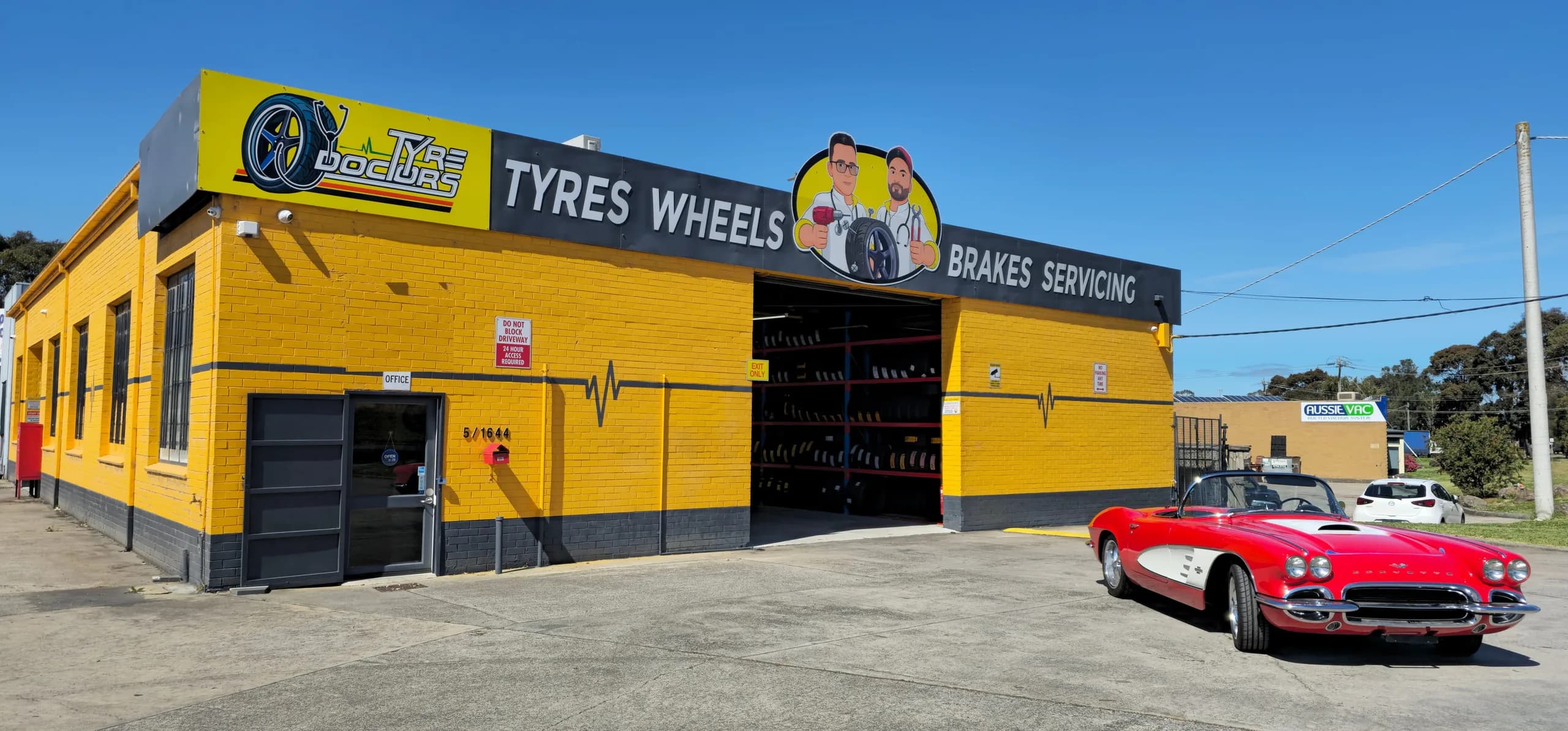
If you do need one, we use the Hunter HawkEye Elite and give you a printed before-and-after report. Wheel alignments start at $100 for small cars, $150 for utes and 4WDs and $180 for European cars. Book a wheel alignment online, or call 03 9763 0100. You'll find us at 5/1644 Ferntree Gully Road, Knoxfield.