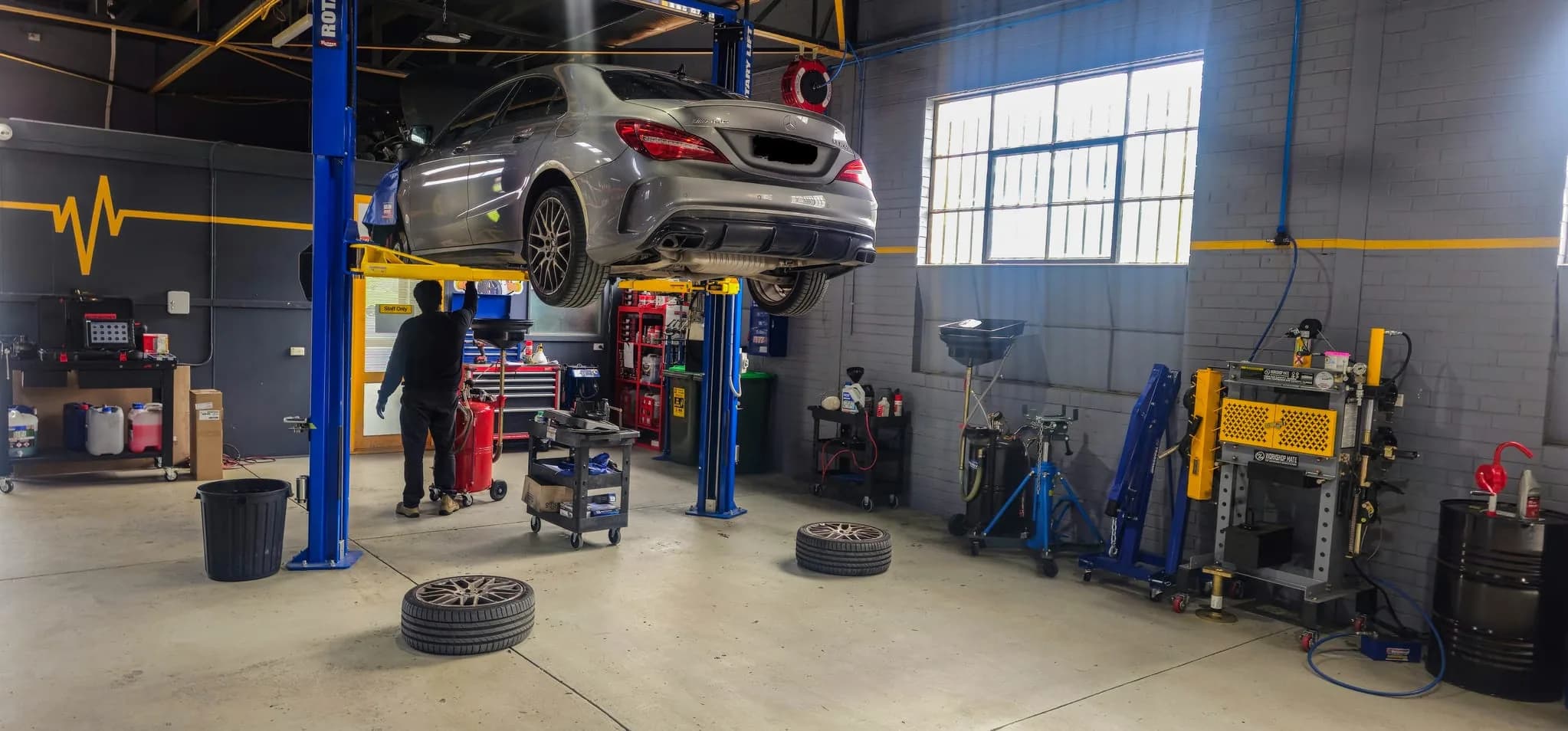
An independent end of warranty inspection in Melbourne costs somewhere between $150 and $350. It’s one of the few checks on a car that regularly pays for itself several times over, because anything it finds is the manufacturer’s problem rather than yours.
The catch is timing. Book it too late and you’re paying for the repairs yourself. This guide covers what it costs, what gets checked, and the window you need to hit.
What it costs, and what the timing is worth
These are estimates only, a guide rather than a quote. Price depends on the vehicle and how deep the inspection goes.
| Inspection | Typical price |
|---|---|
| Standard end of warranty inspection | $150 – $280 |
| Extended inspection, European or 4WD | $250 – $400 |
| Written report with photos | usually included |
| Re-check after dealer repairs | $80 – $150 |
Put that against what it commonly finds. A set of suspension bushes is $600 to $1,200. A leaking rear main seal is $1,500 and up. A DPF is $2,500 to $4,000. Any one of those covered under warranty pays for the inspection ten times over, and none of them will announce themselves while you’re driving.
Book it two months out, not two weeks
This is the part people get wrong.
An end of warranty inspection needs to happen roughly one to two months before the cover expires. That’s not us being cautious. If we find something, you need time to get the car to the dealer, have them diagnose it themselves, order parts, and complete the repair, all while the warranty is still valid. Dealer workshops are booked out weeks ahead. A fault found with ten days left is a fault you’ll probably pay for.
If your warranty ends in December, book in October. If you’re already inside the last month, book now and expect to push the dealer hard on timing.
What gets checked
The point of the inspection is to look in the places a normal service doesn’t, and to document what it finds in a way a dealer can’t wave away.
Engine and driveline, on a hoist. Oil leaks, coolant weeps, seals and gaskets. Slow leaks are the classic warranty find because they’re invisible from the driver’s seat and expensive once they’re yours.
Suspension and steering. Bushes, shocks, ball joints and mounts. Melbourne roads are hard on these and premature wear is a legitimate warranty claim on a car with modest kilometres.
Brakes, measured in millimetres. Wear itself isn’t a warranty item, but warped discs, seized calipers and uneven wear often are.
Transmission and clutch behaviour. Slipping, shudder and harsh shifting, road tested rather than guessed at.
Electrical systems and fault codes. Stored codes tell the story of faults that have come and gone. A car can log a fault dozens of times and never light the dash.
Emissions and DPF on diesels. Soot and ash loading, and whether regeneration is completing. A DPF nearing the end of its life inside warranty is a very good find.
Air conditioning performance. Measured at the vent rather than judged by feel.
Body, seals and water ingress. Damp carpet and rust starting under a seal are both covered and both easy to miss.
You get a written report with photographs. That matters more than it sounds, because a dealer is far harder to argue with when you arrive holding documented evidence rather than a description.
Your rights don’t end with the warranty
Worth knowing before you accept a no.
Under Australian Consumer Law, a car has to be of acceptable quality for a reasonable period, and that period isn’t automatically the same as the warranty term. A major failure shortly after the warranty expires can still be the manufacturer’s responsibility, depending on the age of the car, the kilometres, the price it was sold at and what a reasonable buyer would expect.
A dated inspection report from an independent workshop, showing the fault existed while the car was still covered, is exactly the kind of evidence that argument needs.
Why an independent inspection
We’re not the ones who would have to pay for the repair, which is the entire value of it. A dealer inspecting their own warranty liability has an obvious conflict, however honest the individual technician is.
We also don’t fix it and charge you. If we find something covered, the report goes to you and the car goes to the dealer. If we find something that’s genuinely wear rather than a defect, we’ll tell you that too, because sending you to argue an unwinnable claim wastes your time.
If your car is coming up on its last service inside warranty, it’s worth doing both at once. We can stamp the logbook and run the inspection in the same visit.
Call 03 9763 0100 or book through our end of warranty inspections page. We’re at 5/1644 Ferntree Gully Road, Knoxfield, and we’re open Saturdays.